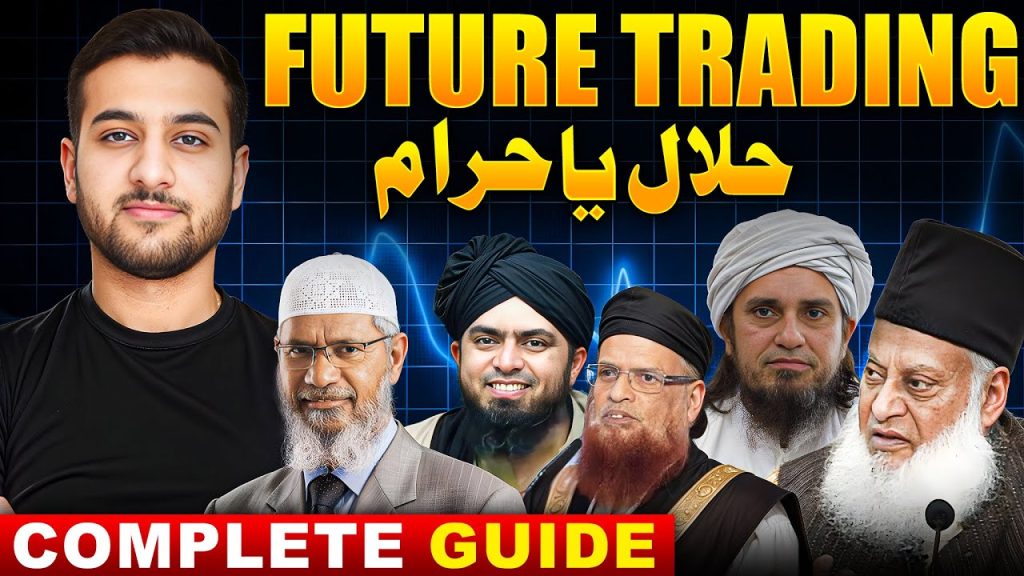
Future trading has become a common term in modern financial markets. But for Muslims who want to remain Shariah-compliant, the big question is: Is future trading halal or haram in Islam?
Let’s explore the Islamic rulings in simple terms, along with what scholars and muftis have said about it.
✅ What is Future Trading?
Future trading means buying or selling a financial asset (like gold, oil, or currency) at a fixed price today, but delivery will happen in the future.
For example:
You agree to buy 100 barrels of oil at $70 each, to be delivered after 1 month — even if the market price changes later.
It’s a contract that involves speculation about future price movements.
📜 What Does Islam Say?
In Islamic finance, certain conditions must be met for a trade to be halal:
📌 Conditions of Halal Trade in Islam:
- The item must exist at the time of sale
- Ownership must be transferred immediately
- No uncertainty (gharar) or gambling (maysir)
- No interest (riba) involved
- Delivery and payment should not be delayed unfairly
❌ Why Most Scholars Say Future Trading is Haram
Most Islamic scholars say that conventional futures contracts are haram because:
- The product does not exist at the time of agreement
- There is high speculation (maysir)
- Often no intention of physical delivery
- Many contracts involve leverage and interest-based margin accounts
- It creates gharar (uncertainty)
🕌 Fatwas and Scholarly Opinions
- Darul Uloom Deoband: Futures trading as practiced in stock exchanges is haram due to gharar and non-ownership.
- Mufti Taqi Usmani: Strongly discourages future contracts involving speculation or delay in ownership.
- Al-Azhar Scholars: Any contract with high uncertainty or gambling elements is not allowed in Islam.
🟠 Is There Any Halal Form of Futures?
Some Islamic finance institutions have introduced halal alternatives such as:
- Salam contracts (used in agriculture, where full payment is made upfront for a future delivery)
- Murabaha and Ijarah-based futures, only under strict guidelines
- Shariah-compliant derivatives, still under development
But these are usually offered under Islamic banks, not in public trading platforms.
📌 Summary Table
| Feature | Islamic Status |
|---|---|
| Conventional Futures | ❌ Haram |
| Physical Delivery Guaranteed | ⚠️ Still Doubtful |
| Salam-based Futures | ✅ Halal (if rules followed) |
| Speculative Futures | ❌ Haram |
| Involving Interest (Riba) | ❌ 100% Haram |
Watch Video: Future Trading Halal or Haram Full Video
✅ Final Verdict
Future trading in conventional markets is not halal in most cases due to:
Involvement of interest (riba)
Uncertainty
Non-possession of asset
Speculation and gambling-like behavior